Proxmox Datacenter Manager is a centralized open-source management solution for distributed infrastructures. With its unified web interface you can easily monitor and control multiple Proxmox remotes, see health and performance at a glance, and coordinate key operations across clusters and data centers.
I found this software on this link it seems like, Proxmox want to follow VMware to manage all VM / Host in one device
Proxmox also mention that Customers with active Enterprise Support for their Proxmox remotes also gain access to Proxmox Datacenter Manager updates and support.
2025 so many new technology need to be explorer. IT keep growing seems too fast for me to catch it up.
One solution to manage your network, firewall, server, VM & etc
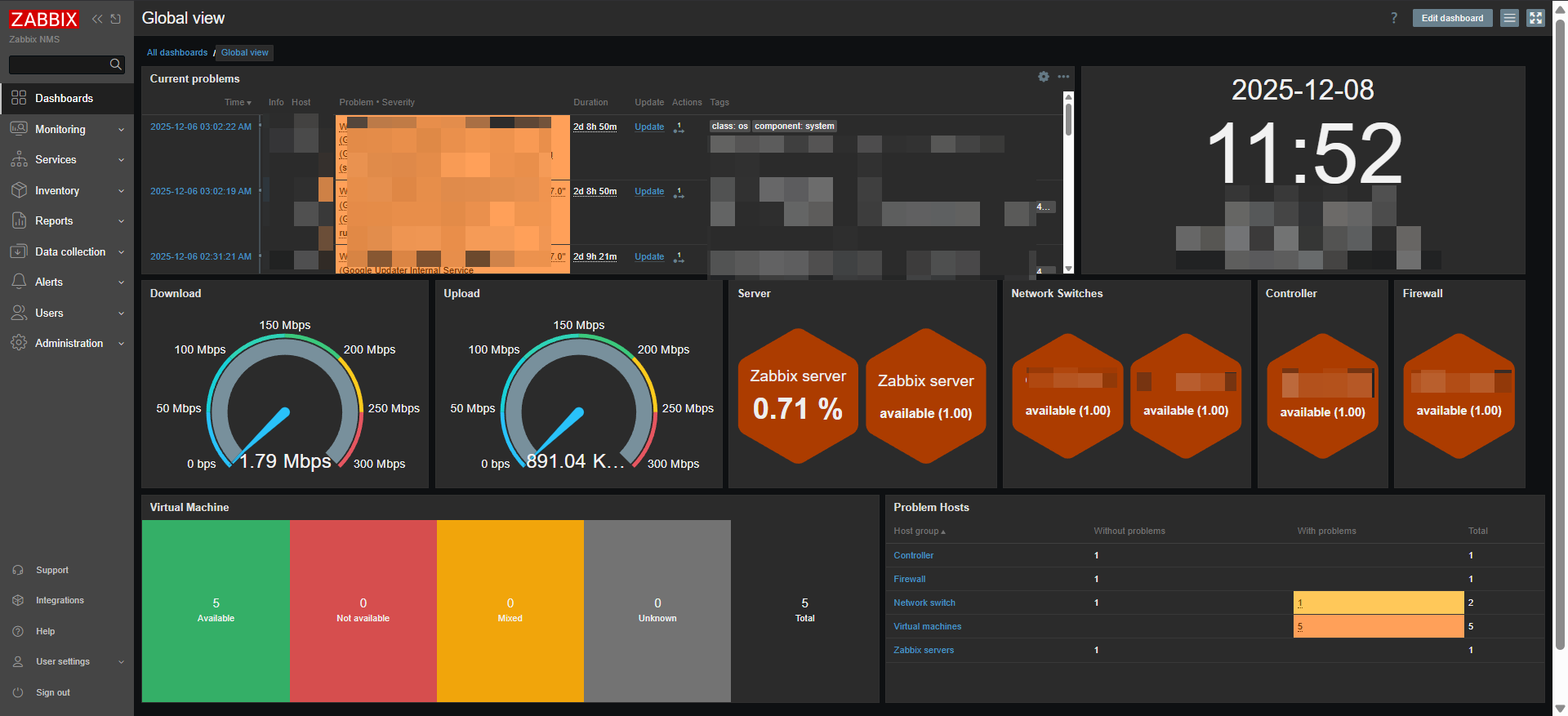
Zabbix is an open-source monitoring platform used to track the performance, health, and availability of IT systems.
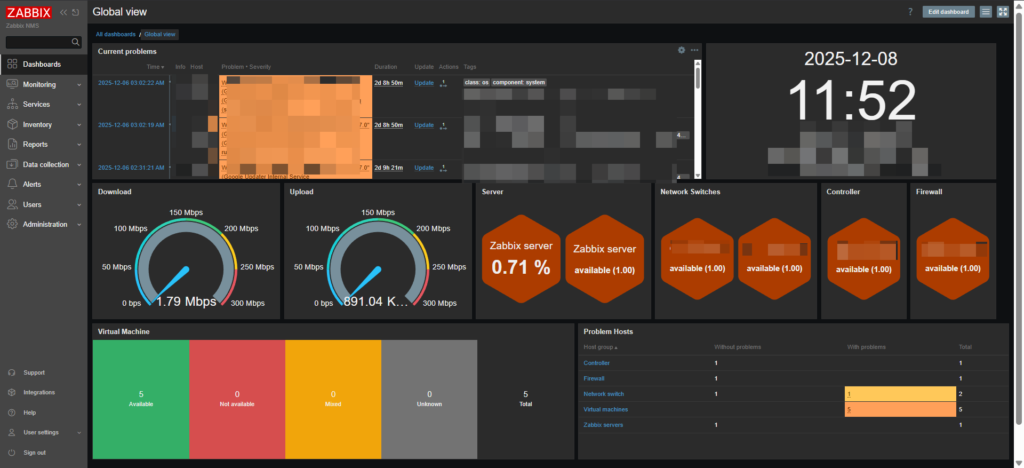
I kinda love Zabbix by the how it can modified or edit to show dashboard. It can either be use with SNMP v3 or agent to be monitored. I also configured it to sent to my telegram group to get notified what current happening to my infra. Zabbix Telegram Guide
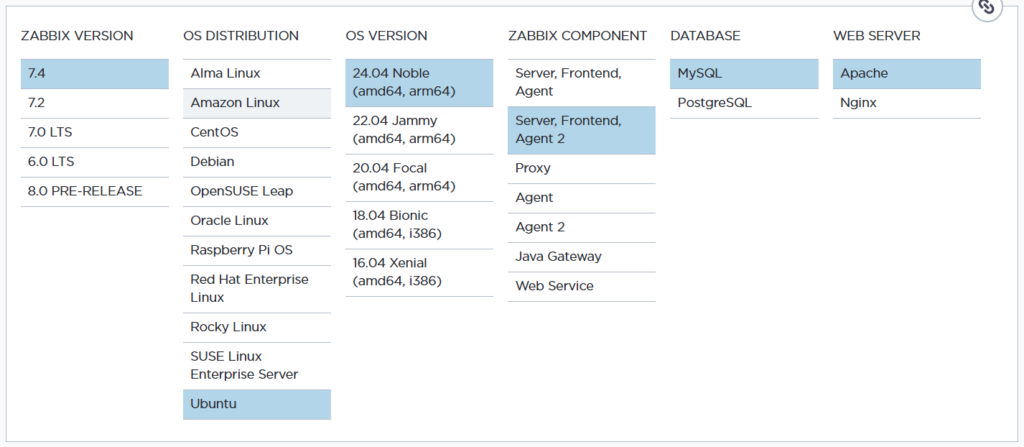
Zabbix provide installation guide which you can find through their official website.
# mysql -uroot -p password mysql> create database zabbix character set utf8mb4 collate utf8mb4_bin; mysql> create user zabbix@localhost identified by ‘password’; mysql> grant all privileges on zabbix.* to zabbix@localhost; mysql> set global log_bin_trust_function_creators = 1; mysql> quit;
On Zabbix server host import initial schema and data. You will be prompted to enter your newly created password.
# zcat /usr/share/zabbix/sql-scripts/mysql/server.sql.gz | mysql --default-character-set=utf8mb4 -uzabbix -p zabbix
Disable log_bin_trust_function_creators option after importing database schema.
# mysql -uroot -p password mysql> set global log_bin_trust_function_creators = 0; mysql> quit;
e. Configure the database for Zabbix server Edit file /etc/zabbix/zabbix_server.conf
DBPassword=password
f. Start Zabbix server and agent processes
Start Zabbix server and agent processes and make it start at system boot.
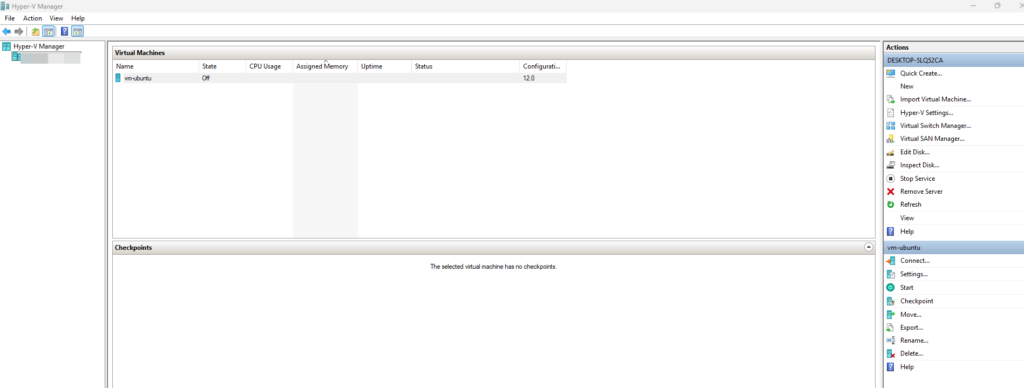
Microsoft Hyper-V is a built-in hypervisor for Windows (Pro, Enterprise, Education) and Windows Server that lets you create and run virtual machines (VMs). It allows multiple operating systems to run on a single physical machine, making it useful for testing, development, or enterprise virtualization. As a Type 1 hypervisor, Hyper-V runs directly on the hardware, offering features like live migration, high availability, and network isolation. You can manage it using various built-in tools.
Many users have migrated to Nutanix or VMware, but these platforms are still widely used by companies to create virtual machines, such as for Active Directory. I previously created AD1 and AD2 on the same server to fulfil customer need based on provided hardware.
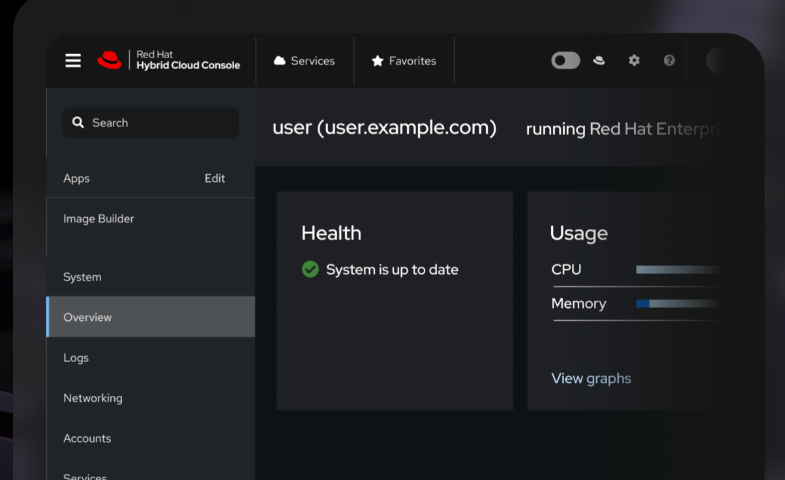
Red Hat Enterprise Linux (RHEL) is a commercial Linux distribution developed by Red Hat. It’s designed for enterprises and organizations that need a stable, secure, and supported operating system for servers, workstations, and cloud environments. RHEL provides long-term support, regular security updates, and certified software packages, making it ideal for production environments, critical applications, and enterprise workloads.
I am not very familiar with Red Hat, but I am aware that some users are still renewing their licenses, and certain licenses include direct support from Red Hat.
A hypervisor is software that allows one physical computer (server) to run multiple virtual machines (VMs) at the same time.
There are two type of hypervisor :
Bare Metal
Hosted on OS
Mostly companies will use either VMware, Nutanix, Windows Hyper-V or etc
There are so many including paid and open-source
(Bare-metal)
Nutanix is a technology company that provides a platform to run virtual machines, storage, and networking in a simple, unified system.
It is best known for hyper-converged infrastructure (HCI), which means:
It combines compute + storage + virtualization into one easy-to-manage platform.
But it need its support hardware for it. Need to check with disti for.
(Bare-metal)
VMware is a company and a technology platform that allows you to run multiple virtual machines (VMs) on a single physical server now own by Broadcom in November 2023.
It so simple to do installation which required to install VMware ESXi
For manage multiple device required installation VMware vCenter.
Before this VMware also provide free version ESXI which can operate normally but backup
(Bare-metal)
Proxmox VE (Virtual Environment) is a free, open-source virtualization platform used to run virtual machines and containers on a server.
Most popular using for
Home labs
Small businesses
Learning virtualization
Even company also use it for small system development
Another alternative for Proxmox is
(Bare-metal)
XCP-ng is a free, open-source virtualization platform (hypervisor) used to run virtual machines (VMs) on physical servers.
It provides Built-in backup support (with Xen Orchestra) Active community